Green Media Program
Green Media Program is a two-part knowledge exchange and community participation project bringing together community environmental defenders...
Read MoreGuided by our curious conviction to assert cinema in the realm of cultural rights in Nepal, Docskool works in the intersections of cinema practice, audience participation and social movement partnerships. We see ourselves guided to not just re-envision lapses in cinema’s practice but work towards film’s role as catalyst to define societies inclusive – more just character. We are today a collective of growing number of filmmakers, artists and campaigners from Nepal and South Asia.
Green Media Program is a two-part knowledge exchange and community participation project bringing together community environmental defenders...
Read More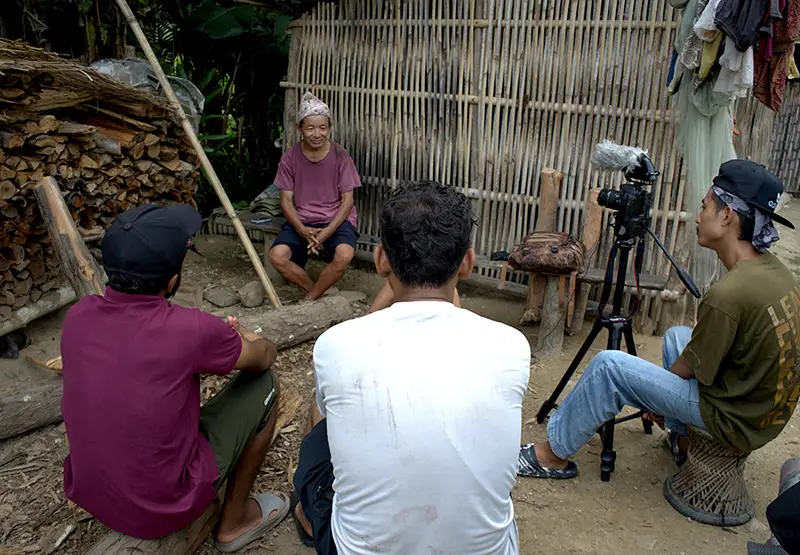
With its history as evening at the Kathmandu Film Centre in 2010, Docskool hosted screenings of queer films with discussions on sexuality in cinema...
Read More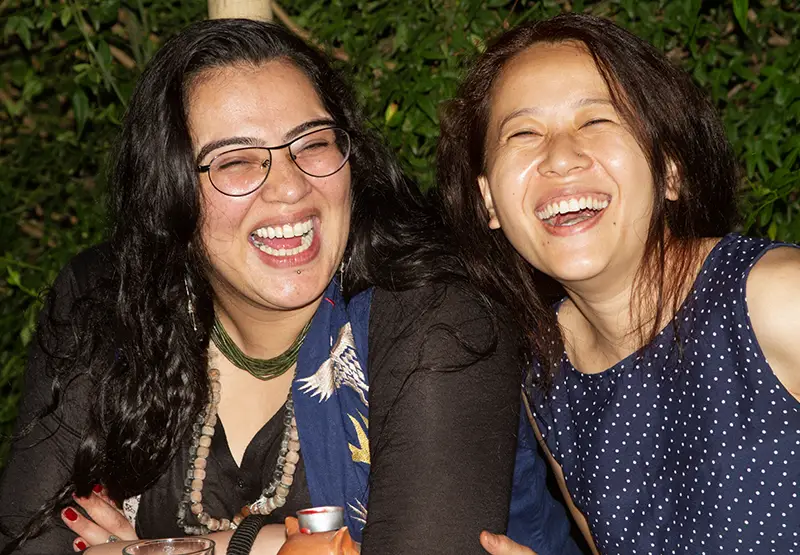
As culture agents, filmmaker stake several risks to create work they believe in. For artists from historically disadvantaged groups of women...
Read MoreDocskool was setup as a screening room and film resource library at a garage top room in Gaurighat in 2008. Our formation coincides with the then recently held ‘Constitution Assembly’ elections and the dethroning of Monarchy in 2006.
2008 – 2012 are best understood as our formative years when Docskool worked on a variety of cinema support mechanisms that included the 5 Rupee cinema fund, a film production support known as Short film factory. In 2011 Docskool organized the Nepal Cine Symposium attempting to bring South Asian cinema closer through interactions, film festival (Something like a film festival) and a pitch based film market (young Asian film market).
Docskool journeyed into working with East African filmmakers from Uganda in 2012 as we helped design strategic directions for the now defund Zuka Film Foundation in Kampala and initiated dialogues on a film center in the city of Gulu in northern Uganda.
Docskool’s Clinik.Kathmandu project lab for South Asian cinema was launched in 2013 with its last season held in 2019. The lab supported over 80 fiction and documentary feature projects from 9 countries as we partnered with several local film collectives and global film markets, festivals from the world over.
The Queer film Festival was programmed in 2023 as part of the second edition of SLFF, with the festival being formally organised in 2024. In 2024 a fellowship for environmental defenders has been launched to be conducted from Docskool’s farm campus in Dhulikhel.
Docskool works with mid career documentary filmmakers, community media workers and social movements as we host creative exchanges and skill bridging on contemporary film practice. We connect historically marginalized audiences as creators to reshape their narratives.
Our 2026 strategy outlines safety and security to documentary filmmakers promoting documentary visibility in Nepal as a priority. We continue working with grassroots environmental defenders and queer people’s towards informed access for locally applicable visual media production.
Docskool’s executive board is reelected every two years. Current board of directors elected in 2024 are.
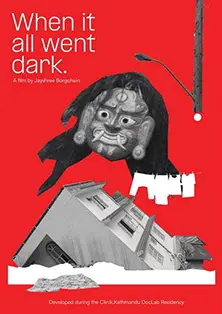
Runtime: 11 Minutes 26 second.
Director, Editor & DOP: Jayshree Borgohain
Read MoreDocskool is not a training organisation. We host several skill enhancement workshops, these cannot be characterized as regular technical trainings. Unless specified most trainings should be paid for. A subsidized fee is applicable in all instance.
Docskool operates as a non-profit NGO. Docskool is registered with the, Social Welfare Council (Registration number: 33466),and Kathmandu Metropolitan City (Registration Number: 3117). Docskool is a tax-free certified organisation. Our PAN No.is: 600323150
Docskool charges a standard fee for all its residential workshops/ artist exchanges unless otherwise states in the event brochure. These costs help us cover organizational and logistical fee for the event. These are also important to help to function as a non profit.
Docskool as a nonprofit receives funds and donations which are the primary source of our operation. All funds received are registered to be approved by the Social Welfare Council prior to work commencement. Docskool maintains an internal financial guideline to manage its finances.
A board member is appointed as the Monitoring and Evaluation focal person at Docskool. They follow the MnE policy to monitor projects for their impact and efficiency towards meeting social objectives.